
Every so often, I dig through old files and find a movie review I forgot I wrote. This one goes way back to 2007, when I was writing for a now-defunct site called Coverups.com. Since Cool Filmz gives me a place to dust off these older reviews, I figured Richard Donner’s Conspiracy Theory was worth revisiting.
For the record, I enjoy conspiracy stories as entertainment, not as reality. That distinction matters. I like shadowy agencies, buried memories, mind-control experiments, secret programs, and characters who are convinced the world is being run from behind the curtain. As a thriller writer, that kind of material is irresistible. As a citizen of the real world, I prefer my conspiracies safely contained inside movies, books, and late-night “what if?” conversations.
So here I am, sitting at Cigarro — my Thursday afternoon remote office — smoking a cigar and looking back at a review I wrote years ago about a movie I have not watched in a long time. That may not make this a fresh review, exactly, but it does make it a fun time capsule.
At a Glance
Title: Conspiracy Theory
Director: Richard Donner
Writer: Brian Helgeland
Cast: Mel Gibson, Julia Roberts, Patrick Stewart
Genre: Thriller / Mystery
Release Date: August 8, 1997
Runtime: 135 minutes
Production Company: Warner Bros. Pictures
Filming Locations: New York City
Cool Filmz Rating: Queen — 3 out of 5 stars
The Setup
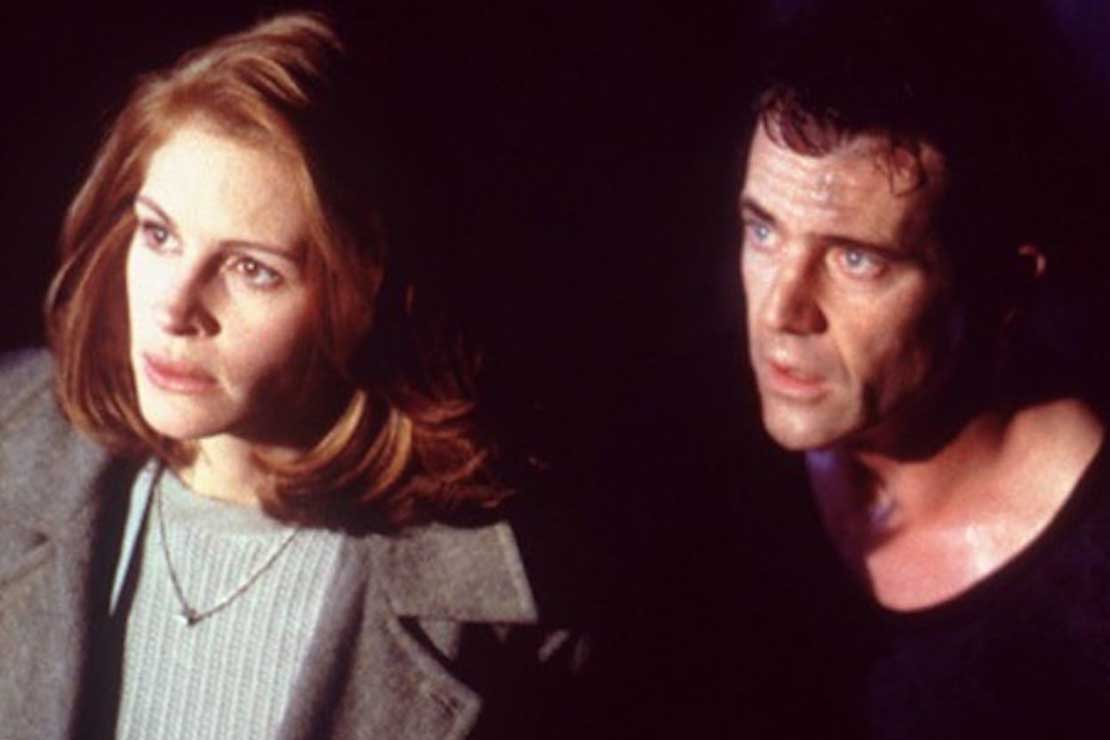
In Conspiracy Theory, Mel Gibson plays Jerry Fletcher, a New York City taxi driver obsessed with secret plots, hidden powers, and government cover-ups. Jerry shares his theories with anyone trapped in the back of his cab, which makes him seem eccentric at best and deeply unstable at worst.
Then one of his theories appears to be true.
That is the hook. Jerry may be paranoid, but paranoia does not mean no one is after you. Once he becomes the target of real shadowy forces, the film shifts from quirky character study into government-thriller territory, complete with surveillance, pursuit, memory manipulation, and dangerous secrets.
Julia Roberts plays Alice Sutton, a Justice Department attorney who becomes Jerry’s ally and emotional anchor. Their relationship gives the movie a romantic thread, while Patrick Stewart brings a colder, more sinister presence as the kind of villain who seems to know far more about Jerry than Jerry knows about himself.
What Works
The premise is strong because it plays with a simple fear: what if the person everyone dismisses as crazy is the one person who actually sees the truth?
That idea gives Conspiracy Theory its best energy. Jerry’s mind is chaotic, but the movie keeps pulling us toward the possibility that his chaos may contain a pattern. Gibson brings a frantic, twitchy intensity to the role, making Jerry both funny and unsettling. He is not simply a heroic truth-seeker. He is damaged, obsessive, and difficult to trust, which makes the central mystery more interesting.
The movie also benefits from Richard Donner’s sense of pace. Donner knew how to make a mainstream thriller move. The film has chases, narrow escapes, government heavies, and enough Hollywood gloss to keep it accessible even when the story gets darker. It is not a raw conspiracy thriller, but it is an entertaining one.
The romance between Jerry and Alice is clearly designed to broaden the film’s appeal. For hard-core conspiracy fans, it may soften the edges too much. But for a big studio thriller, the pairing works well enough. Roberts gives the film warmth and credibility, while Gibson provides the nervous energy.
What Doesn’t Work
The movie’s biggest weakness is also part of its appeal: it wants to be both a serious paranoid thriller and a star-driven Hollywood crowd-pleaser. Those two instincts do not always fit neatly together.
The conspiracy elements are intriguing, especially when the story brushes against ideas like mind control, suppressed memory, and secret government programs. But the film often keeps those ideas at a safe distance. It gestures toward darkness without fully living there. The result is entertaining, but not as unsettling as it could have been.
The star power also works against the film at times. Gibson and Roberts are so recognizable that the movie never quite disappears into its own paranoia. You are watching a conspiracy thriller, yes, but you are also very aware that you are watching a major studio vehicle built around two enormous movie stars.
That does not ruin the film. It just keeps it from becoming truly dangerous.
The Conspiracy Angle
The most interesting part of Conspiracy Theory is the way it treats paranoia as both a joke and a survival mechanism. Jerry’s theories sound ridiculous until they stop sounding ridiculous. That is the tension the movie keeps returning to: where is the line between delusion and hidden truth?
The film also arrived at the right cultural moment. Released in 1997, it tapped into late-20th-century anxieties about surveillance, government secrecy, covert experiments, and institutions operating outside public view. It belongs to that era of thrillers where fax machines, shadow files, mysterious doctors, and men in suits could still feel like the machinery of a hidden world.
In that sense, Conspiracy Theory is a product of its time in the best way. It feels like a 1990s thriller through and through.
A Few Interesting Notes
One of the better-known details about the film is that Gibson reportedly improvised some of Jerry’s opening cab-driver conspiracy rants, which makes sense. Those scenes have a loose, manic quality that helps establish Jerry’s unstable charm.
The film also touches on fears connected to mind control and government experimentation, ideas that have long fueled conspiracy fiction. Whether handled lightly or seriously, those themes give the story a darker foundation beneath the Hollywood polish.
Another fun detail is that Conspiracy Theory was written by Brian Helgeland, who also worked on L.A. Confidential. That pedigree helps explain why the movie has more ambition than a standard chase thriller, even if it does not fully reach the level of its best ideas.
Final Thoughts
Conspiracy Theory is not a great movie, but it is a solid one. It has a strong premise, appealing stars, an entertaining pace, and just enough paranoia to make the ride worthwhile.
It is also a reminder that conspiracy fiction works best when it taps into a deeper fear. The real hook is not simply “the government is hiding something.” The real hook is the possibility that a broken, ignored, or ridiculous person may be the only one telling the truth.
That is why the movie still has appeal. It may be glossy, uneven, and more mainstream than truly subversive, but it knows how to deal a decent hand.
Cool Filmz gives Conspiracy Theory a Queen: respectable, entertaining, and worth revisiting, even if it never quite becomes the King it wanted to be.
Watch it for yourself and see what card it deals you.