

Reasonable accommodations in the workplace are usually associated with things like modified schedules, adaptive equipment, standing desks, accessible workspaces, or software that helps people do their jobs more effectively.
In the Star Wars galaxy, apparently, reasonable accommodations can also include menacing black armor, cybernetic limbs, a built-in life-support system, and a voice modulator that makes every staff meeting sound like a death sentence.
Having recently rewatched Star Wars: Episode III — Revenge of the Sith, I found myself thinking about Darth Vader in a way I had not before. Yes, Emperor Palpatine is an evil manipulator, war criminal, democracy-destroyer, and all-around galactic nightmare. But after Anakin Skywalker’s catastrophic duel with Obi-Wan Kenobi on Mustafar, Palpatine did something surprisingly practical.
He gave his new employee exactly what he needed to keep doing the job.
And in that very specific, deeply cursed sense, the Darth Vader suit may be one of the most extreme examples of workplace accommodation in science fiction history.
What Are Reasonable Accommodations?
In ordinary workplace terms, reasonable accommodations are adjustments that help an employee with a disability perform essential job functions. That might mean adaptive technology, modified duties, flexible scheduling, physical workspace changes, or other forms of support.
In a healthy workplace, accommodations are not about charity. They are about giving people the tools they need to contribute.
Of course, not every employer handles this well. Some organizations take accessibility seriously. Others act like putting one gluten-free muffin in the breakroom counts as a full inclusion strategy.
But Palpatine? Palpatine went big.
Anakin Skywalker’s Very Bad Performance Review
Before Mustafar, Anakin Skywalker was a high-performing recruit with tremendous upside. He was powerful, ambitious, emotionally unstable, and already disturbingly comfortable with authoritarian solutions. From a Sith talent-acquisition standpoint, that is basically the dream candidate.
Then came the duel with Obi-Wan.
By the end of that fight, Anakin had lost multiple limbs, suffered catastrophic burns, and was left barely alive on the edge of a lava river. Objectively speaking, this was not ideal onboarding for the Empire’s new executive enforcer.
Palpatine could have written him off. He could have decided that his new apprentice was no longer capable of meeting the physical demands of Sith employment: hunting Jedi, intimidating officers, commanding fleets, and occasionally Force-choking underperforming middle management.
Instead, Palpatine invested in him.
Again, let us be clear: this does not make Palpatine good. It does, however, make him strangely committed to employee retention.
Enter the Darth Vader Suit
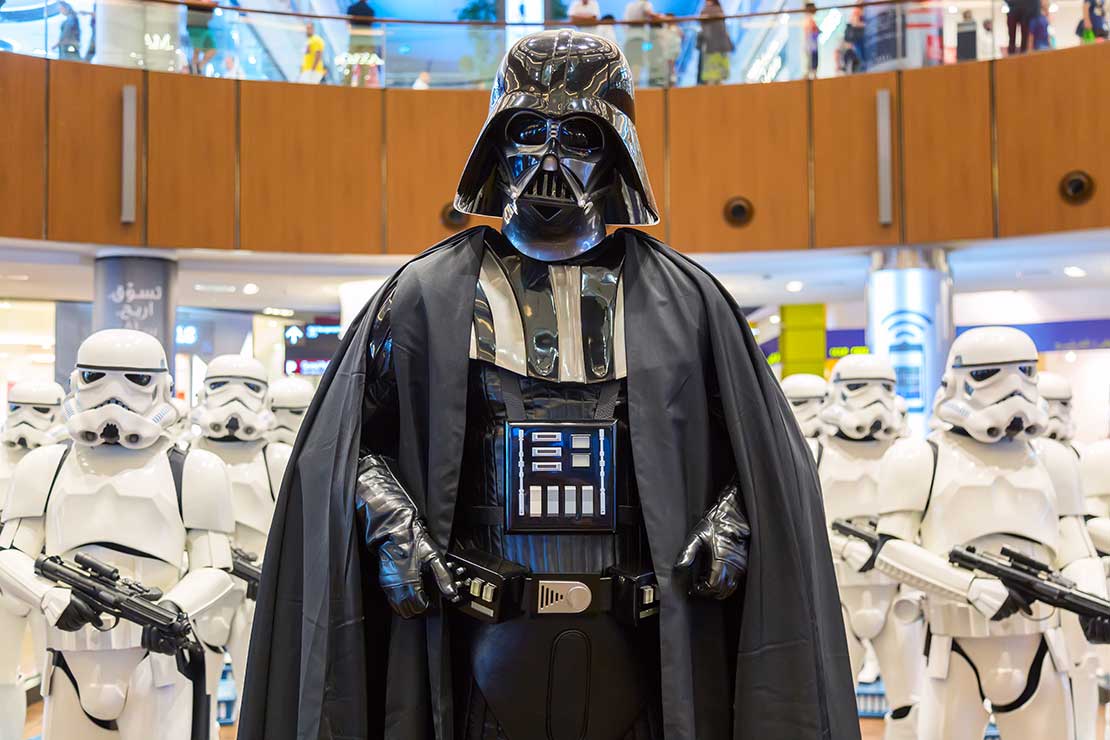
The Darth Vader suit is not just a costume. It is a full accommodation package.
Anakin receives advanced prosthetic limbs, respiratory support, protective armor, medical stabilization, and a terrifying new professional brand identity. The suit allows him to walk, breathe, fight, command, and remain physically imposing despite injuries that would have ended almost anyone else’s career.
It also gives him presence. Nobody hears that breathing and thinks, “This guy might be struggling with workplace reintegration.” They think, “I should probably not disappoint him.”
Even the voice modulator does work. Anakin Skywalker sounded like a wounded, furious young man. Darth Vader sounds like the last voice you hear before your quarterly objectives become irrelevant.
From a purely functional standpoint, the suit is remarkably effective. It keeps Vader alive, enhances his physical abilities, and allows him to continue serving as the Empire’s chief instrument of fear. That is more than checking a compliance box. That is building an entire role around what the employee can still do.
Again, evil. But thorough.
Sith Benefits vs. Jedi Support Systems
This is where the comparison gets uncomfortable for the Jedi.
The Jedi Order had years to notice that Anakin was struggling. He was traumatized, grieving, angry, impulsive, attached, terrified of loss, and clearly not thriving under the emotional management strategy of “just don’t feel things so much.”
Where was the support? Where was the counseling? Where was the mentoring that involved more than cryptic phrases and disapproving stares? Yoda’s advice often amounted to a fortune cookie with ears. Mace Windu seemed to treat Anakin like a workplace liability from day one. Obi-Wan loved him, but even he often seemed overwhelmed by the scale of Anakin’s issues.
The Jedi had philosophy. The Sith had a medical suite.
That does not make the Sith morally better, obviously. Their performance-improvement plans involved murder, fear, and absolute obedience. But in Vader’s case, Palpatine recognized a damaged but powerful asset and built a system that allowed him to remain useful.
The Jedi told Anakin to control his feelings. Palpatine gave him legs, lungs, armor, and a cape.
It is a low bar for compassion, but an impressive bar for logistics.
The Dark Side of the Accommodation
Of course, there is a catch. There is always a catch with the Sith.
The Vader suit helps Anakin survive, but it also traps him. It reinforces his new identity. It makes him dependent on the system Palpatine controls. The accommodation is not purely generous; it is also a mechanism of control.
That is what makes the whole thing darkly fascinating. Palpatine gives Vader what he needs, but he does so in a way that strengthens Vader’s loyalty and isolation. The suit restores function while also becoming a prison. It supports him, brands him, weaponizes him, and reminds him every second of what he has lost.
So yes, Palpatine accommodated Vader. But he also turned that accommodation into ownership.
That feels very Sith.
Why This Works as a Star Wars Thought Experiment
Obviously, this is not an argument that Emperor Palpatine belongs on the cover of Galactic HR Monthly. He overthrew a republic, destroyed the Jedi, built a fascist empire, and had a management style best described as “lightning-based.”
But as a fan thought experiment, the Vader suit raises an interesting question: what does real support look like when someone’s abilities, identity, and role change dramatically?
In the most twisted way possible, Revenge of the Sith gives us a workplace accommodation story. A catastrophically injured employee is not discarded. His role is redesigned. His tools are rebuilt. His limitations are addressed. His presence is reimagined.
Unfortunately, this all happens inside an evil empire, so the lesson comes wrapped in black armor and moral rot.
Final Thoughts
I cannot recommend working for Sith Inc. The benefits package may be strong, but the culture has serious problems, including authoritarian leadership, unsafe lightning exposure, and an alarming number of employees being choked during meetings.
Still, when it comes to accommodating Darth Vader after Mustafar, Palpatine did not merely offer a folding chair and a sympathetic email. He rebuilt his apprentice into one of the most feared figures in the galaxy.
Was it compassionate? No. Was it ethical? Absolutely not. Was it effective? Disturbingly, yes.
So the next time you compare Jedi robes and Sith armor, remember to check the benefits package.
May the reasonable accommodations be with you.