It’s funny what you find when digging through old files. The other day, I stumbled across a review I wrote years ago for The Da Vinci Code, Ron Howard’s 2006 adaptation of Dan Brown’s blockbuster novel starring Tom Hanks as symbologist Robert Langdon.
Young me had some strong opinions about this one. Honestly, I respect the audacity.
Revisiting the review now, it feels like a perfect fit for Cool Filmz: part movie review, part time capsule, part reminder that some cultural moments feel enormous when they arrive, then a little strange once the dust settles.
And The Da Vinci Code was absolutely a cultural moment.
The Premise
At the heart of The Da Vinci Code is a conspiracy built around one explosive idea: Jesus was married to Mary Magdalene, they had a child, and the Holy Grail was not a cup but a bloodline. From there, the story spins into secret societies, religious cover-ups, hidden symbols, ancient clues, and a murder mystery that begins inside the Louvre.
The film leans hard into the idea that powerful institutions have spent centuries protecting a version of history that serves their authority. In the world of the story, the Council of Nicaea becomes less a theological milestone and more a suspicious boardroom meeting where the divine status of Jesus was politically weaponized to help unify an empire.
Is that historically solid? Not especially. Is it thriller fuel? Absolutely.
That tension is the whole appeal of The Da Vinci Code. It takes just enough real history, art, religion, and symbolism to sound plausible, then drives a conspiracy truck straight through the middle of it.
At a Glance
Title: The Da Vinci Code
Director: Ron Howard
Screenwriter: Akiva Goldsman
Based on: The Da Vinci Code by Dan Brown
Release Year: 2006
Genre: Mystery / Thriller
Main Cast: Tom Hanks, Audrey Tautou, Ian McKellen, Paul Bettany, Jean Reno
Runtime: 149 minutes
Cool Filmz Rating: Queen
The Movie
Early in the film, we meet Silas, played by Paul Bettany, a murderous monk connected to Opus Dei as depicted in the story. The movie introduces him through self-inflicted punishment, religious obsession, and a violent murder that sets the plot in motion. It is lurid, unsettling, and designed to make the audience uncomfortable from the start.
That is one of the film’s strengths and weaknesses. The Da Vinci Code wants to feel dark, dangerous, and forbidden, but it often mistakes solemnity for suspense. The violence surrounding Silas is creepy and effective, yet much of the movie around him feels strangely stiff.
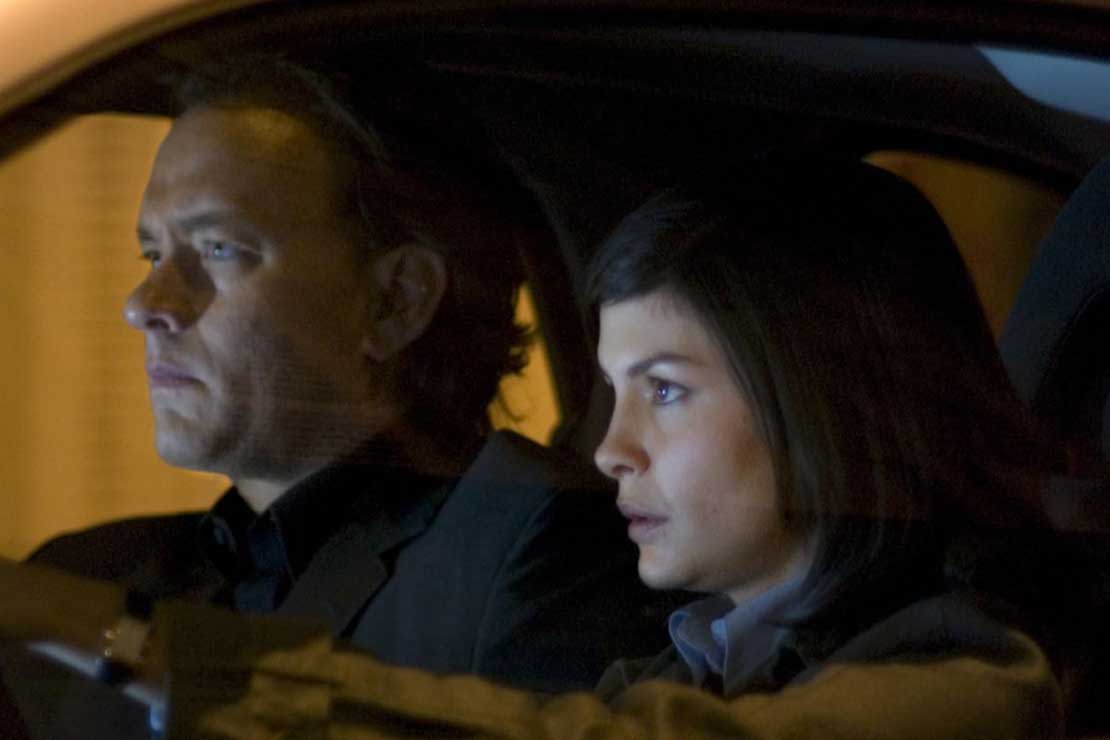
Tom Hanks is, of course, Tom Hanks, which means he is never bad. But this is far from his most memorable performance. His Robert Langdon spends much of the movie explaining things, looking concerned, and carrying a hairstyle that may be the film’s most enduring mystery. Audrey Tautou brings intelligence and presence to Sophie Neveu, but the chemistry between Sophie and Langdon never quite clicks.
That may not be entirely the actors’ fault. The story is so busy racing from clue to clue that the characters rarely have room to breathe. The result is a movie filled with revelations that often feel more mechanical than emotional.
What Works
Ian McKellen is easily one of the film’s highlights as Sir Leigh Teabing. He gives the movie a jolt of energy whenever he appears, bringing wit, theatricality, and scholarly obsession to a role that could have easily become pure exposition. McKellen makes Teabing feel like a man who has spent his life waiting to tell someone the most dangerous secret in history.
Jean Reno is also solid as Bezu Fache, even if the role mostly asks him to be stern, suspicious, and extremely French. He does that well, and the film benefits from his presence.
Some of the flashbacks work better than the main plot. The glimpses of historical violence, Sophie’s family tragedy, and the darker corners of religious history give the movie texture. These moments suggest the more mysterious and emotionally charged version of The Da Vinci Code that might have been.
The film also looks polished. Ron Howard knows how to move a big studio thriller along, and the production has the glossy seriousness of a movie that knows the source material arrived with an enormous built-in audience.
What Doesn’t Work
The biggest problem is that The Da Vinci Code works better as a page-turner than as a film.
On the page, Dan Brown’s short chapters, cliffhangers, puzzles, and historical tangents create momentum. Readers supply some of the atmosphere themselves. On screen, however, all that exposition has to be spoken, staged, or visualized. The gears are visible, and they do not always turn smoothly.
The movie often feels like it is explaining a conspiracy rather than letting us experience one. Characters stop to decode symbols, unpack history, debate theology, and explain why the latest clue matters. That can be fun in small doses, but at 149 minutes, the weight starts to show.
There is also the problem of hype. By the time the movie arrived, the novel had already made its “big secret” famous. For many viewers, the shock factor was gone before the opening credits. Instead of discovering the conspiracy, the audience was waiting to see how the film would stage what they already knew.
That makes the movie feel less dangerous than it wants to be.
The Big Reveal
The central revelation — that Mary Magdalene carried the bloodline of Jesus — is presented as world-shattering. In theory, that should give the ending enormous emotional and theological weight. In practice, it lands with more of a shrug than a thunderclap.
The final stretch, especially Sophie’s connection to the larger mystery, does have a surprisingly sentimental quality. There is a more human story buried under all the codes, secret societies, and religious intrigue. Unfortunately, the movie spends so much time untangling the conspiracy that the emotional payoff arrives late and feels rushed.
That is the great frustration of The Da Vinci Code. There is a compelling mystery here, but the movie often treats plot mechanics as more important than wonder.
Final Thoughts
Looking back, The Da Vinci Code is not a disaster. It is a functional, handsomely produced conspiracy thriller with a few strong performances and a premise that still has pulpy appeal. But it is also overlong, overly serious, and never quite as provocative as it thinks it is.
The novel became a phenomenon because it made readers feel like they were discovering forbidden knowledge. The movie, by contrast, feels more like watching people discuss forbidden knowledge in very dramatic rooms.
Still, there is something undeniably entertaining about the whole enterprise. Secret codes, hidden bloodlines, ancient art, shadowy religious politics, and Tom Hanks wandering through Europe in search of the truth — that is not the worst way to spend an evening.
A great conspiracy film? Not quite.
A fascinating cultural artifact from the mid-2000s? Absolutely.
And in the end, maybe that is the real reason to revisit it. The Da Vinci Code is less interesting as a perfect thriller than as a snapshot of a moment when a wild blend of art history, religion, and conspiracy theory briefly took over the world.
Dan Brown may not have uncovered the Holy Grail, but he certainly found the formula for selling a mystery.