
For the past several months, I have spent a surprising amount of creative energy working on everything surrounding the writing.
I reorganized media. I cleaned up workflows. I rebuilt sections of ScratchWriting.com. I developed better ways to move photographs, audio, video, drafts, and finished material through production without constantly wondering where I put something. I experimented with new tools and started paying more attention to the machinery behind independent publishing.
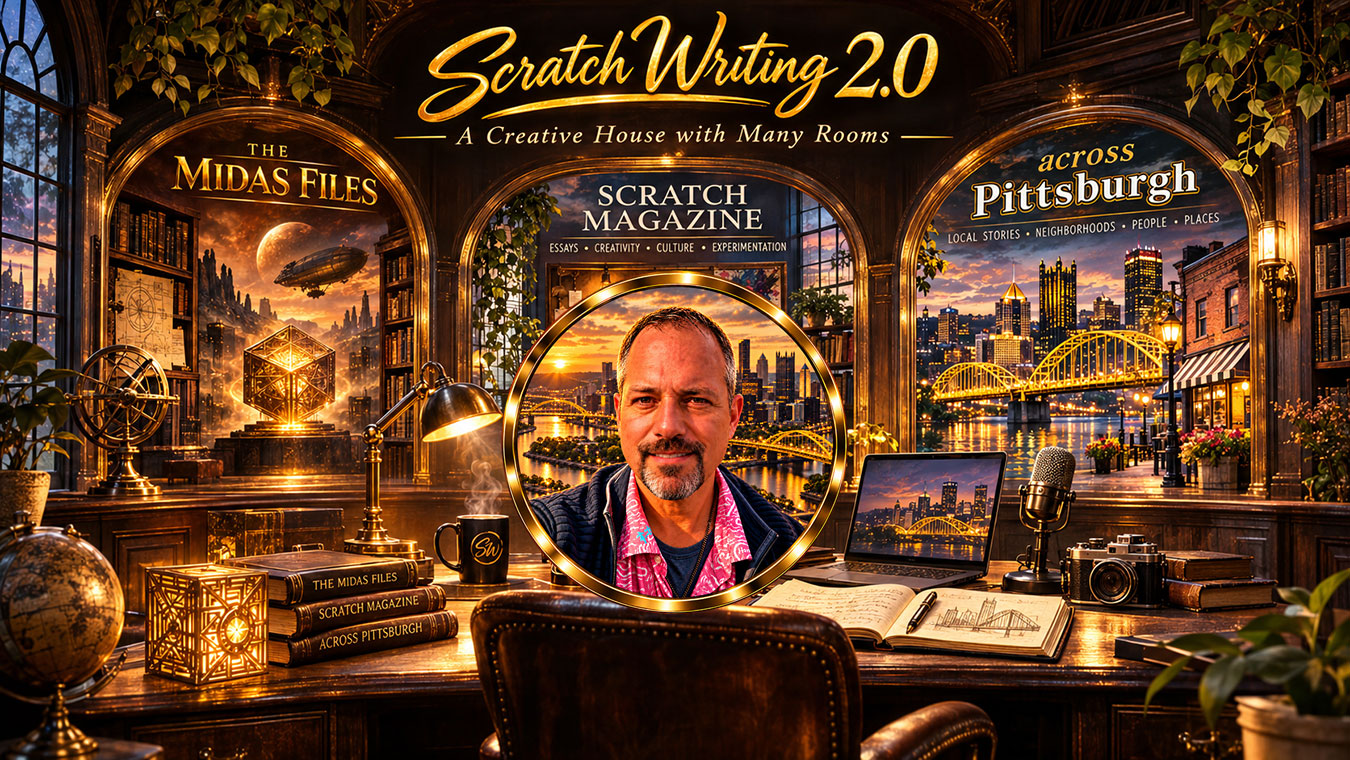
Somewhere along the way, I realized Scratch Writing had quietly arrived at what I think of as Scratch Writing 2.0.
That does not mean the website is finished. Websites are probably never finished. It means I finally understand what Scratch Writing actually is.
It is a house.
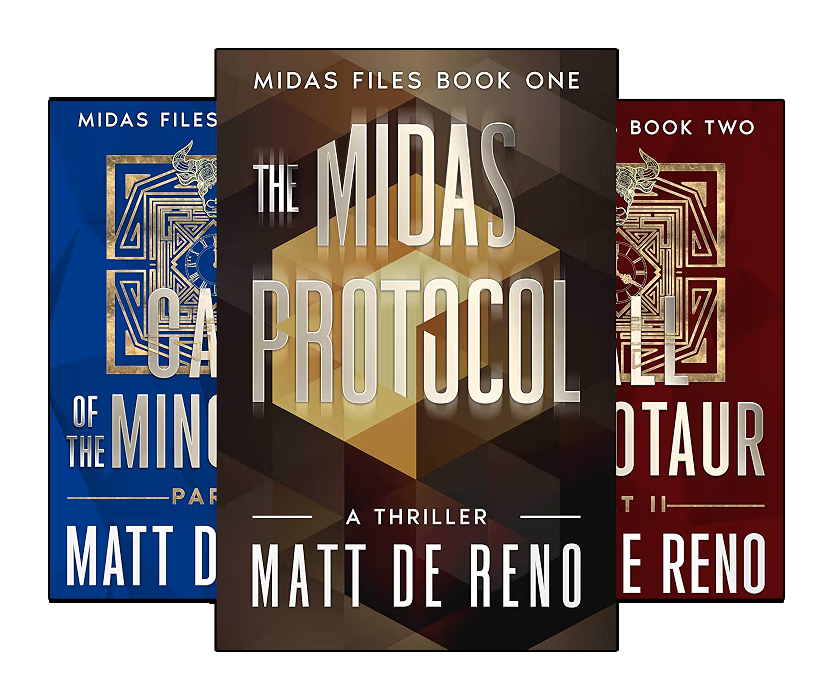
Inside that house are three main rooms: The Midas Files, where the novels and the fictional universe live; Scratch Writing Magazine, where I can wander into essays, technology, movies, humor, and whatever else interests me; and Across Pittsburgh, where I get to tell stories about the place I call home.
Once I understood those rooms, I stopped feeling as though every creative idea needed to compete with every other creative idea. They have places to go now.
More importantly, I have been building the machinery behind them.
Building the Creative Machine
Some of this work has been spectacularly unglamorous.
File structures. Naming conventions. Production folders. Templates. Repeatable processes. Figuring out what belongs where and trying to make routine tasks sufficiently routine that I no longer have to think very hard about them.
That may not sound like creativity, but I have increasingly come to believe it is what protects creativity.
Every minute I spend hunting for the correct photograph, rebuilding something I already built once, or trying to remember how I produced the last video is a minute I am not writing. The goal of a workflow is not to turn art into an assembly line. The goal is to remove enough friction that when I actually have something to say, I can get to it.
The same has been true with tools.
For a long time, Clipchamp did everything I needed. It was simple, comfortable, and got me surprisingly far. Then I produced Fairway Thirteen and followed it with a lengthy narrated article, and I started feeling the edges of what I was asking it to do. Longer productions became cumbersome. I wanted more control. Video was becoming less of an occasional experiment and more of an actual storytelling medium for me.
So I moved into CapCut.
That meant becoming a beginner again.
There is always something mildly irritating about leaving software you know for software that can theoretically do more but initially requires you to figure out where somebody moved all the buttons. Still, the transition has been worth it. I am slowly developing another production workflow that should eventually become second nature, just like the others.
And that is when I realized something.
I had spent enough time building the machine.
It was time to feed it a story.
Enter Bingham’s Notebook
And that is where I am now.
Fully into Bingham’s Notebook.
Not thinking about writing it. Not outlining something I may eventually write. Not arranging the office so that conditions will someday become favorable for writing it.
Writing it.
Larry Bingham has been lurking around the Midas Files almost from the beginning. His notebook, his research, his discoveries, and what ultimately happened to him have always been part of the mythology. For years, though, much of Bingham existed as history behind the other stories.
Now he gets his own.
What has surprised me is how quickly the book has started revealing that it is much larger than simply filling in some Midas Files backstory. It has its own characters, its own eras, its own mysteries, and its own argument about history, time, and whether knowing what happens next gives anyone the power to change it.
The deeper I get into it, the less it feels like a bridge between novels and the more it feels like a novel that was sitting there all along, waiting for me to notice it.
That is usually a very good sign.
Everything Else Was Preparation
There is a temptation when you enjoy tools—as I clearly do—to keep improving the workshop indefinitely.
There is always another workflow to refine. Another piece of software to learn. Another section of the website to polish. Another video technique to experiment with. Another clever thing AI might be able to help me do.
I enjoy all of that.
But none of it is the reason Scratch Writing exists.
The stories are.
That may be the most important thing I have learned from this whole stretch of rebuilding and experimentation. A good creative system should eventually become almost invisible. It should make it easier to move an idea from my head into a manuscript, an article, an audio production, or a video without the process itself becoming the main event.
I think I am finally getting there.
Scratch Writing 2.0 is not really a redesigned website. It is not CapCut, AI, a cleaner media library, or a better folder structure. Those are pieces of it.
Scratch Writing 2.0 is knowing what I want to make, knowing where it belongs, and having a system that helps me make it.
And right now, what I want to make is Bingham’s Notebook.
So the website can survive without me moving another module around for a while. CapCut will still be there when I want to experiment. Across Pittsburgh will continue supplying adventures. The Magazine will continue giving me someplace to wander when an idea catches my attention.
But Larry Bingham has the floor.
I have a notebook to finish.
Listen To the Audio Article
About the Author
 Matt De Reno
 is the author of The Midas Files, a Pittsburgh-rooted science-fiction thriller series exploring UFOs, secret histories, ancient technology, and the occasional problem caused by reality folding in on itself. In The Scratching Post, he writes about the creative life behind the books—storytelling, indie publishing, AI experiments, live readings, works in progress, and whatever strange idea has wandered into his notebook that week. Email him at