
What did this movie feel like to a guy who writes Pittsburgh-rooted sci-fi thrillers about hidden history, alien power, secret technology, and whether humanity can handle the truth?
Honestly?
It made me a little nervous.

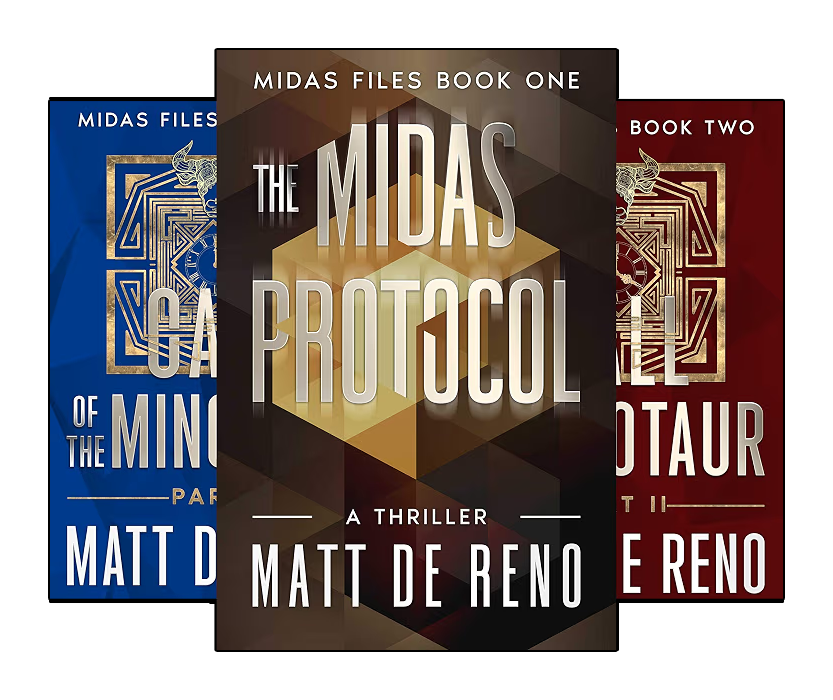
I saw Disclosure Day a couple of weeks ago, not long after finishing Call of the Minotaur: Midas Files Book Two, and I had that strange writerly experience of sitting in a theater watching one of the great masters play around in the same mythological sandbox I had just spent years digging through.
Alien revelation. Government secrets. Hidden technology. Human beings suddenly forced to confront a truth that has been managed, buried, weaponized, and withheld.
That is not exactly casual viewing when you just wrote a giant sci-fi thriller where the whole objective of Majestic 12 is not merely to usher in Disclosure Day, but to position itself to assume the power vacuum in the post-disclosure world.
So yes, I watched Spielberg’s movie with popcorn in one hand and a quiet little author panic attack in the other.
But here is the good news: Disclosure Day does not make me feel like I was on the wrong track.
If anything, it made me feel like I was on better footing than I realized.
I am not saying “great minds think alike,” because that would be ridiculous. Steven Spielberg is Steven Spielberg. He helped build the cinematic language of modern wonder. I am a Pittsburgh guy writing ancient-tech conspiracy thrillers around vanished soldiers, old families, impossible artifacts, and dangerous truths buried under history.
But I will say this: it is thrilling when your mind seems to be circling some of the same questions as his great mind.
And this movie is absolutely circling some of those questions.
Disclosure Day is Spielberg returning to the alien portfolio late in his career, but this is not the innocent sky of E.T. or the transcendent invitation of Close Encounters of the Third Kind. This is a more suspicious sky. A more militarized sky. A more managed sky.
The question is no longer simply: Are we alone?
The question is: Who knew, who lied, who benefited, and what happens when the truth finally arrives?
That is where the movie really landed for me.
My own version of Disclosure Day in Call of the Minotaur is a lot more pessimistic. In The Midas Files, disclosure is not just a revelation. It is an opening. A rupture. A power vacuum. A chance for the people who have been preparing in the shadows to step forward and say, “Do not worry. We already built the new world. You just have to live in it.”
Spielberg, being Spielberg, still leaves more room for wonder.
And thank God for that.
Because the thing I loved most about Disclosure Day is that it still has Spielberg magic in it. The aliens disguising themselves to children as woodland creatures is quintessential Spielberg wonder-filled cinema. That is the kind of idea that could seem silly in the wrong hands, but in his hands, it feels mythic, gentle, eerie, and beautiful all at once.
Only Spielberg can take something that sounds like a bedtime story and make it feel like first contact.
Then there is the alien wand.
I do not know what else to call it, so I am calling it the alien wand.
When the government revealed that it had some kind of alien device — a tool, a weapon, a key, a technological miracle — I almost laughed out loud in the theater. Not because it was funny, but because it felt so close to the kind of ancient impossible technology I had just been writing. In Call of the Minotaur, the Gold Box is one of those objects that is not merely a machine and not merely an artifact. It sits in that dangerous middle space between technology, power, ritual, and control.
Spielberg’s alien wand gave me that same charge.
Then the movie went even further and started brushing up against something very close to what I call “dream walking” in The Midas Files — the ability to project yourself into someone else’s reality. Again, I am not claiming a one-to-one match. I am not saying Spielberg read my manuscript in some secret Universal bunker.
But as a writer, it was exhilarating.
There is something deeply affirming about seeing a master filmmaker reach toward similar ideas: consciousness as terrain, reality as something that can be entered, manipulated, shared, or invaded. That tells me these ideas are not just weird little things rattling around in my own head. They are part of a bigger imaginative current.
And Spielberg is still surfing that current better than almost anyone.
The other pleasant surprise is that Disclosure Day is also a really good action movie.
Sometimes when Spielberg goes into “big idea” mode, people forget how cleanly he can stage chaos. The invisible people and invisible vehicles smashing through things were simply cool. No higher analysis required. Sometimes cinema just needs to make you grin like a twelve-year-old, and this movie did that for me more than once.
The action has weight. The wonder has texture. The paranoia has bite.
Is it an Ace?
No.
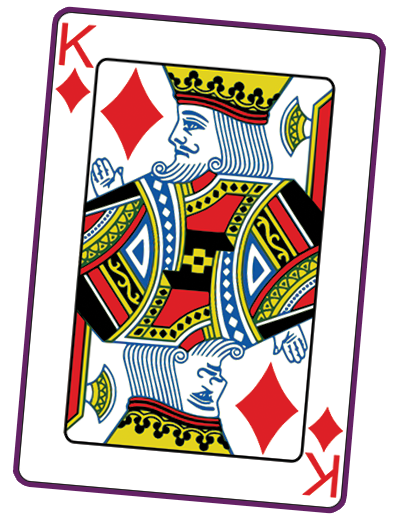
In the Cool Filmz playing-card rating system, an Ace is the top card. That is the five-star zone. That is where I would put Close Encounters of the Third Kind. I would probably put E.T. there too. Those are not just great alien movies. They are genre-defining events. They changed the emotional vocabulary of science fiction cinema.
Disclosure Day does not quite do that.
But it is a strong King.
A King is not perfect, but it is powerful. Confident. Memorable. Worth respecting. A movie that may have a few imperfections, but still plays like a major entry from a major filmmaker.
For me, Disclosure Day is a much better installment in Spielberg’s alien portfolio than War of the Worlds. I know War of the Worlds has its defenders, and it certainly has some incredible sequences, but that movie always felt colder to me. More punishment than revelation. More survival than wonder.
Disclosure Day gives me more of what I want from Spielberg looking skyward. It gives me fear, yes. It gives me secrecy, pursuit, manipulation, and institutional rot. But it also gives me children seeing magic in the woods. It gives me strange devices that feel like keys to forbidden reality. It gives me the possibility that the universe is not only dangerous, but meaningful.
That is the Spielberg I love.
And that is why this movie stuck with me.
Not because it is his greatest alien film.
Not because every piece of it works perfectly.
But because it feels like Spielberg, late in the game, looking back at the same sky that made him famous and asking a harder question:
What if the truth comes, and humanity is not ready?
As someone writing my own version of that question from the hills, rivers, old estates, military shadows, and hidden histories of Pittsburgh, I found that incredibly satisfying.
Maybe the light in the sky is a warning.
Maybe it is an invitation.
Maybe it is both.
Either way, Spielberg still knows how to make us look up.
CFZ Card: King
Not an Ace like Close Encounters or E.T., but a strong King — a thrilling, wonder-filled, slightly darker late-career Spielberg alien movie that earns its place in the portfolio.